Mission Intelligence Systems

Founded by Dan Flynn · Since 2026

Diagnose why capable organizations underperform.

Mission Intelligence Systems applies the Four A's methodology, developed through 30 years of transformation work, to diagnose the structural conditions limiting your organization and rebuild them systematically. Not culture change. Not technology adoption. Organizational conditions.

Diagnostic: about 20 minutes · Advisory: Exploratory call · Engagement: Tailored to your needs

The methodology is proven. The founder is documented. The results are specific. Mission Intelligence Systems brings all three to every engagement.

Choose your path

What do you need to understand next?

Understand

Understand the Framework

Learn how Attention, Alignment, Authority, and Adaptability shape organizational readiness and execution.

Explore the Four A's

Evaluate

Evaluate Your Organization

Use the Executive Organizational Diagnostic to identify operating model constraints that may be limiting transformation, AI adoption, and execution.

Start the Diagnostic

Engage

Work With Mission Intelligence Systems

Explore executive advisory, strategic facilitation, transformation support, leadership workshops, and speaking engagements.

Explore Advisory Services
Emberford on the swollen Wend on the morning after the storm

New · A game from Mission Intelligence Systems

Ardenwake

A living realm shaped by every choice.

A persistent world where leadership is practiced, not lectured. Take up a life in Emberford on the morning after the flood, when five people want you and you cannot answer all of them. No score, no course, no account. It runs in your browser and nothing leaves it.

The method, end to end

How the work actually runs.

Most of the market owns one of these steps. Measurement, or benchmarks, or the offsite, or the execution cadence. The value is in the sequence, because a diagnosis nobody acts on and a plan built on the wrong constraint fail in the same way.

  1. Step 1See the conditionA reading of the four conditions and the one most likely to be constraining you.Start the diagnostic
  2. Step 2Align the leadership teamWhere your leaders disagree about the same organization, on the same day. The disagreement is the finding.Leadership Team Diagnostic
  3. Step 3Rebuild the operating modelThe full instrument across the organization, a report, and a findings session against the constraint.Comprehensive Diagnostic
  4. Step 4Run the cycleA quarter of work with owners and dates, and a debrief that says what actually moved.Quarterly Readiness Planning
  5. Step 5Measure what changedThe same instrument again, against the recorded earlier result. The comparison is the point.How the cycles work

Step five returns to step one. Readiness is not a project that finishes, and the comparison against a recorded earlier reading is what tells you whether anything changed.

Evidence

The framework was earned, not theorized.

The Four A’s of Organizational Readiness came out of three decades of practical work, not a whiteboard. Here is the evidence behind it.

Three decades
Of enterprise transformation

Thirty years improving how organizations actually perform, across government and industry, from national security to manufacturing and construction.

Dozens of organizations
One repeatable pattern

The Four A's was not invented in one company. It was distilled from patterns seen again and again across defense, technology, manufacturing, construction, and federal agencies.

Enterprise scale
Refined under real load

Sharpened while supporting transformation efforts serving thousands of employees, and rebuilding data platforms running thousands of automated jobs every day.

Proven results
Outcomes, not effort

Failing government programs rescued. Decision cycles shortened. Contracts returned to profitability. The OPM engagement is published in full, client named and figures stated, so the claim can be inspected rather than taken on trust.

A builder's philosophy
Where the thinking began

Grounded in construction, systems thinking, psychology, and organizational behavior. The approach started on job sites and matured in boardrooms.

Across DoD, NNSA, OPM, manufacturing, construction, and consulting, the pattern held: capable people held back by the conditions around them, not the limits within them.

See the full evidence →

The first, second and fourth figures below come from a single engagement, documented at the OPM data warehouse case study. The third is documented at 45 days on an eight-year problem.

20 → 1,600+
Daily data processes at OPM once the conditions changed, each running nine times a day
6 weeks → 1 hour
Time to diagnose and remediate a production failure. Same team, no new tooling
45 days
To reach production on a Fort Leavenworth requirement that internal teams and other contractors had each attempted, and none completed, over eight years
A new branch
OPM stood up its data reporting branch on the strength of that result

The instrument, and its limits

The scoring, the thresholds, how the indicated constraint is selected, what the diagnostic is intended to support and what it explicitly does not yet claim are all published, including the psychometric properties no study has established for it. Read what it cannot do alongside what it can.

Methodology and limits →

What you can use

Three things, and they do different jobs.

Practice is not measurement, and measurement is not commitment. Each one says what it is not, so you can tell which you actually need.

Builder Training

Practice the judgment before the quarter that needs it.

Nothing here measures your organization and nothing here commits it. A simulation is safe to get wrong, which is the whole reason to run one.

8 live surfaces

Open Builder Training

Executive Diagnostics

Measure the conditions your results are actually made of.

A reading is a claim to check, not a plan. What to do about it is the next platform, and the recommendations here are the most defensible question rather than an instruction.

10 live surfaces

Open Executive Diagnostics

Readiness Planning

Turn a reading into a period of work the people doing it own.

This is not training and not a scenario. It runs against your real capacity, with your real people, and what comes out of it is a commitment.

6 live surfaces

Open Readiness Planning

Founder

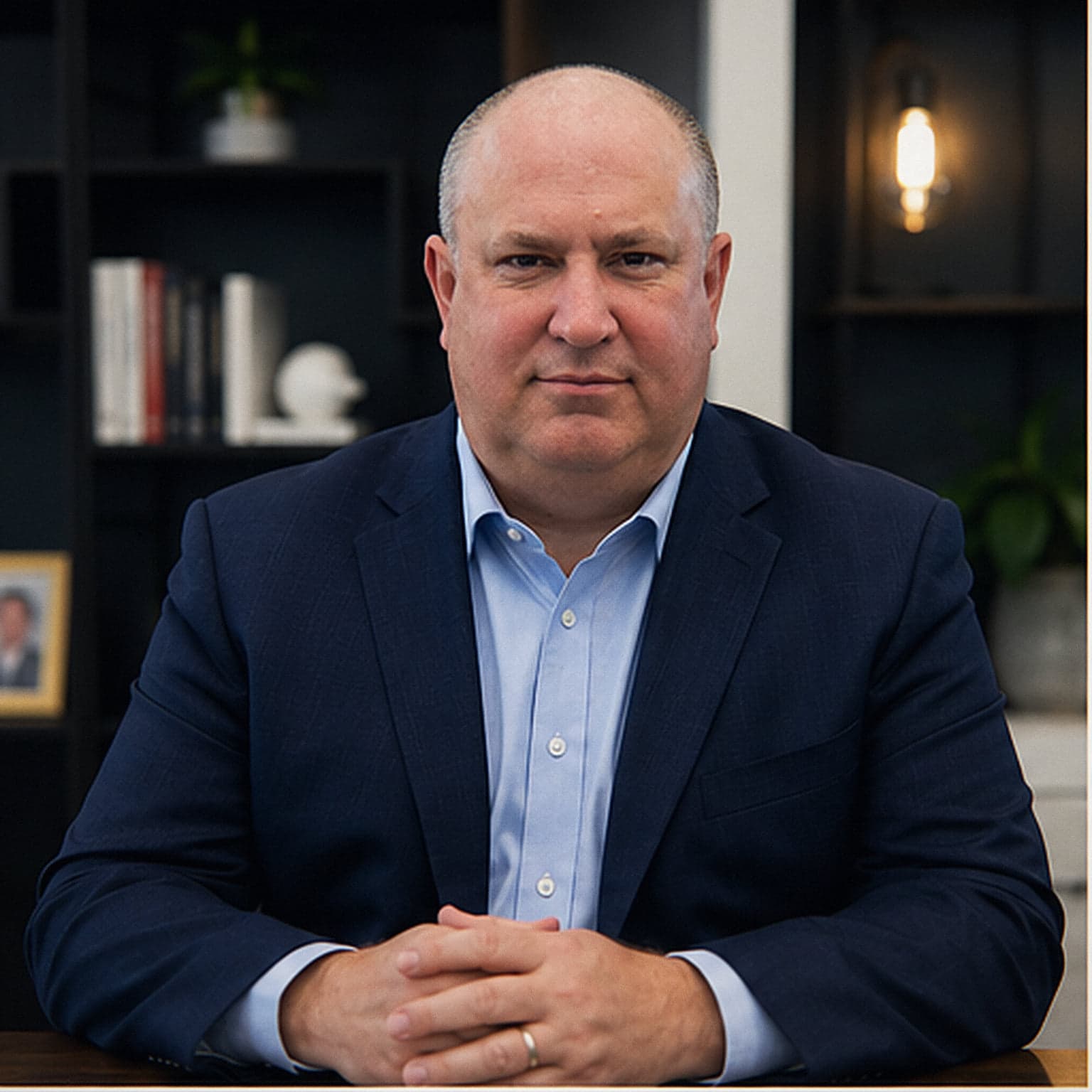
Dan Flynn founded Mission Intelligence Systems to scale the methodology he developed over 30 years of transformation work across federal, defense, manufacturing, and commercial organizations. The Four A's framework emerged from real conditions, real constraints, and real outcomes. He continues to lead methodology and strategy while Mission Intelligence Systems executes engagements with executive teams ready to rebuild their organizational conditions.

Methodology in Practice

When organizational conditions change, results follow.

Six years into building a data warehouse, the Office of Personnel Management had 20 fragile processes, most of them failing daily, and queries that took hours to return. The constraint was not the technology, and it was not the team. It was the conditions built around the team. Eight months after those conditions changed, the same people were running more than 1,600 processes nine times daily, other federal agencies were approaching OPM to ask for that team by name, and OPM stood up an entire data reporting branch on the strength of the result.

Strategic Execution

Opportunity evaluation under pressure.

Dan's ability to evaluate complex opportunities, pressure-test strategy, and drive coordinated execution repeatedly leads to measurable business gains. In one engagement, he secured a real estate asset and realized a return of more than 200 percent within a 90-day window. This was not a transaction. It was building a strategy, identifying the constraint, and executing with precision across a team under real competitive pressure.

"Dan is a rare leader who consistently blends strategic insight with disciplined operational follow-through."

Burke Tervort, MHA, MPA

Health Service Officer, Army Reserves

The Methodology

Organizations don't fail because of people. They fail because of conditions.

Capable people held back by poor conditions produce mediocre results. Change the conditions rather than the people, and the same team performs differently. That is what happened at OPM, and it is what the Four A's is built to find.

The Four A's Diagnostic

Mission Intelligence Systems uses the Four A's to diagnose why capable organizations underperform. The diagnostic reveals which of the four conditions is failing, and what rebuilding looks like.

The diagnostic is the entry point. Advisory work rebuilds the conditions. Execution support brings those changes to life. This is how Mission Intelligence Systems works with organizations.

Diagnostic: about 20 min · Explore your primary constraint · Receive executive summary

Attention

What must stop so the critical work can move?

Attention is not just about what the senior leader focuses on. It is about what the organization focuses on: what gets measured, reviewed, celebrated, and starved.

Alignment

Do leaders share a common understanding of what matters most?

Alignment is the difference between an organization that moves when you lead and one that moves only when you push.

Authority

Are decisions being made at the right level with enough speed?

Authority determines whether the organization can act on what it knows. When decisions stack up waiting for approval, capability isn't the problem: architecture is.

Adaptability

Can the organization learn faster than conditions change?

Adaptability is the capacity to sense change, learn from feedback, and reconfigure work before conditions make the original plan obsolete.

Founder Track Record

The record Mission Intelligence Systems is built on.

Named, verifiable endorsements from leaders who worked directly with founder Dan Flynn. The methodology Mission Intelligence Systems delivers came out of the work they describe here.

"Dan Flynn stands out as one of the most transformative leaders I've had the privilege to work under. His mastery of data architecture, ETL/SQL engineering, and large-scale process optimization has repeatedly delivered dramatic performance gains. He led an initiative that reduced several mission-critical data processes from hours or even days to seconds by redesigning and optimizing the underlying ETL/SQL pipelines."

Jace Turville

Project Manager, CSP-SM

Reported to Dan

"Under Dan's leadership, our teams rapidly matured into highly productive, agile, and outcomes-focused groups. He transformed our data engineering, ETL, and SQL development capabilities into an enterprise-grade function that became the benchmark for technical excellence across the organization. In over 20 years of my career, I have never worked in a group as unified, driven, and high-performing as the ones he leads."
Bryan Higbee, MBA

Sr Applications Development Analyst

Reported to Dan

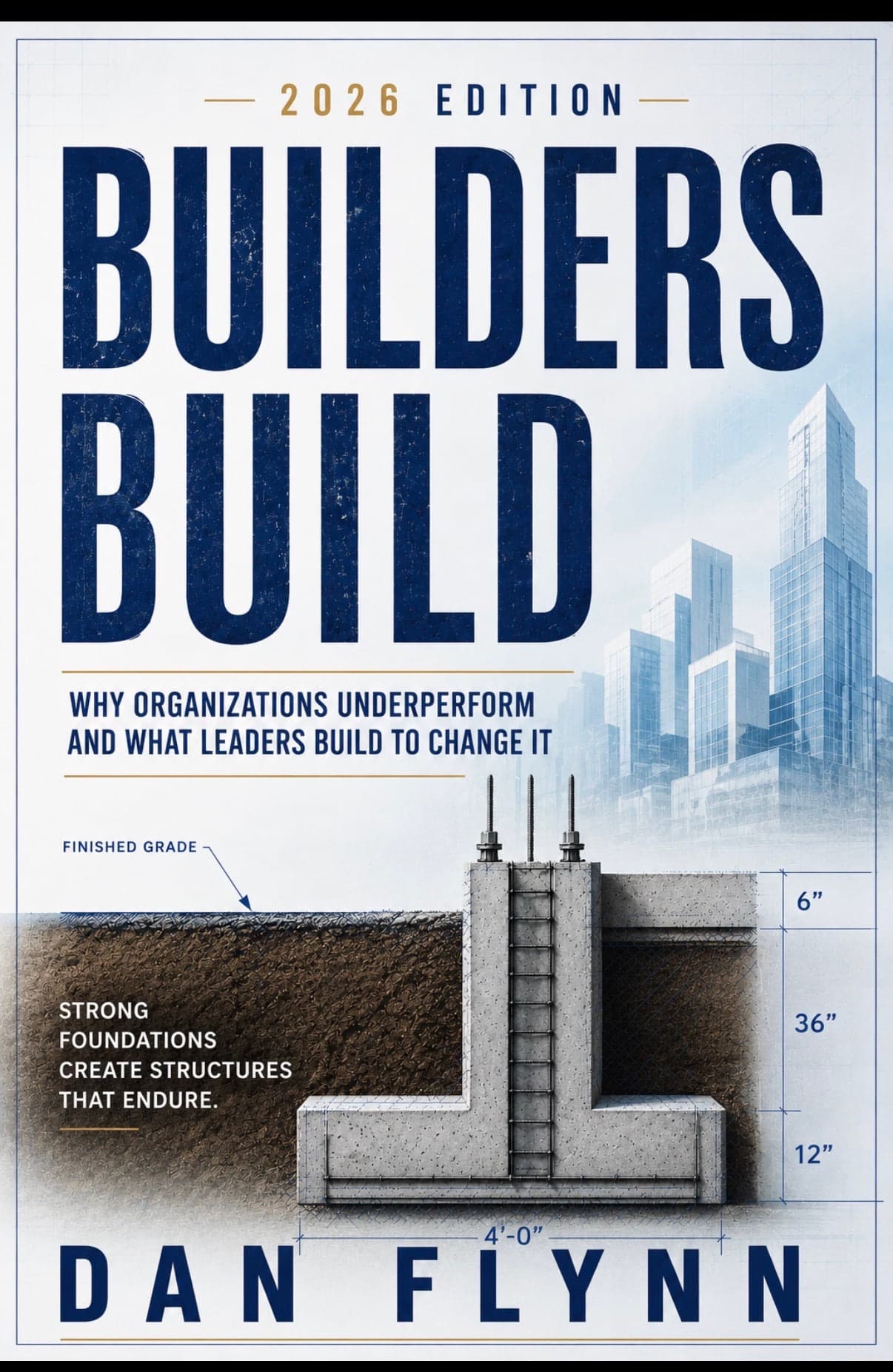
Builders Build: book cover

Founder Thought Leadership

Builders Build

The Four A's of Organizational Readiness™

By Dan Flynn, founder of Mission Intelligence Systems. Drawing on 30 years of transformation work to answer the question every serious leader eventually asks. Coming Fall 2026.

Learn More →

Common Questions

Frequently asked questions.

What is Organizational Readiness?

Organizational Readiness is the degree to which an organization has built the conditions required to execute its strategy. It is not about people or technology: it is about the environment leaders have constructed around their teams. The Four A's diagnoses readiness across four dimensions: Attention, Alignment, Authority, and Adaptability.

Why do AI transformations fail?

AI transformations fail for the same reason all transformations fail: the organization was not ready. New technology amplifies the operating model leaders already have. When Attention is fragmented, Alignment is weak, Authority is unclear, and Adaptability is absent, AI investments expose those gaps rather than closing them.

What is the Four A's Framework?

A diagnostic framework developed through organizational diagnostics inside federal, defense, and commercial organizations. It identifies four conditions that determine whether capable people produce extraordinary results: Attention, Alignment, Authority, and Adaptability.

What does an Organizational Readiness consultant do?

An organizational readiness consultant diagnoses the operating conditions limiting performance: not the people, but the environment built around them. Dan reads the organization's actual conditions before recommending anything. The work is deliberate construction: what must change, in what order, and how to build it.

How is this different from change management?

Change management helps people adapt to a predetermined change. Mission Intelligence Systems diagnoses why the organization cannot execute its strategy in the first place, and builds the conditions that make execution natural. The Four A's is a diagnostic lens, not a change management methodology.

How is this different from a benchmark?

A benchmark tells you how you compare to an industry average, which takes decades of comparative data and still says nothing about what to do on Monday. The Executive Organizational Diagnostic answers a different question: which conditions your own organization has built, and in Team mode, where your leadership team disagrees about the organization it runs. The divergence is itself a finding. When leaders spread widely on one item, that item is the meeting.

Every organization builds the conditions it will live with.

Mission Intelligence Systems helps you see which conditions are failing and rebuild them deliberately. The methodology is proven. The founder is documented. The results are specific.